
First Published 13th February 2017
You may have noticed that it’s been a long some time since I last posted. In part, this is due to a lengthy and unexpected admission to hospital in July, leading to my second Cardiac Ablation in 12 months. In greater part, the silence is due the time it’s taken me to organise my thoughts on the subject I wish to write about and get myself motivated (Thank you Mrs. Skwerg and Dr. Nashat for the encouragement!).
The stay in hospital has, in fact, provided the subject – hospitals, my experience of them and hopefully some words of, if not wisdom, at least useful advice. It’s a big topic and will require several posts and along the way I’ll reference my “Rules” of being a good patient. Think of them as soundbites of advice. Lest I confuse, they don’t crop up in order. Rather, when a rule is illustrated by a passage I’ll mention the relevant rule. You can see the list of rules here.
I’m going to let you into a secret. I really don’t mind going to hospital.
Just to clarify, it is not that I enjoy hospital so much I want to have an arrhythmia so I can visit, but rather that when I am there, I’m used to the environment and I don’t find it intimidating. Despite my positivity about hospital, my wife points out that, after a couple of days, even I get grumpy, in a Victor Meldrew sort of way.
I think there are two significant reasons for my positive attitude to hospital.
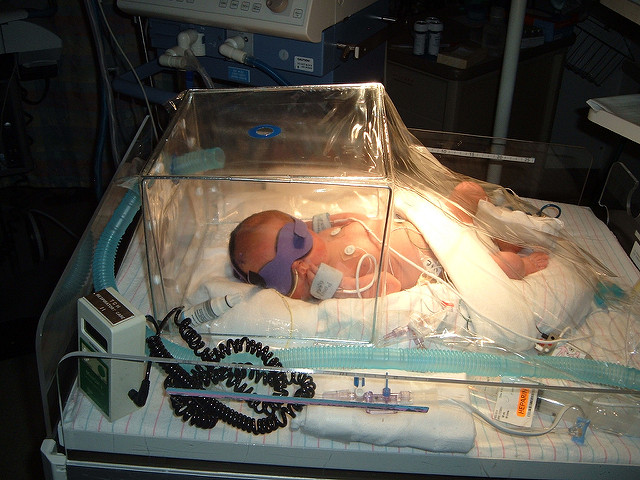
Most important is simply the amount of time I have spent in hospital. Hospitals have been my second home pretty much from the moment I was born. I spent at least the first 6 months of my life in hospital. My first memory is of someone (I’ve no idea who) unzipping a clear plastic tent and reaching in for me. It’s not a clear memory by any means but I have always assumed it’s someone opening an oxygen tent.
I continued to spend much of my childhood in and out of hospital, and have particularly fond memories of the Westminster Children’s Hospital. (Now gone, proof that the destruction of the NHS was already underway many years ago.) I watched my first Bond movie there (“Diamonds are Forever”) and ran (well, moved slowly) up and down the ward corridor when playing StarWars™ with other children (imagining I was Han Solo of course). There always seemed to be ice-cream and jelly available for pudding and I developed a lifelong love of Crusha Milkshake there. There was also an amazing grey rocking horse and many Richard Scarry books in the waiting room that made an outpatient visit so much more tolerable.
Through my teens my visits became less frequent and were more often outpatient visits. Through my twenties and thirties, I had only outpatient visits to monitor my condition. (Except for a single abortive attempt to insert a Stent.) Now, as I get older, the inpatient stays are returning with a seemingly ever greater frequency as my condition progresses. They’re nothing like as frequent as when I was a child, but the point is I go to hospital a lot, and I go to a lot of hospitals (but more of that later).
The other reason for my positive attitude is perhaps a rather more unsavoury character trait – I quite like the attention. Being a complicated patient is one of the few things I excel at (it doesn’t require much effort – at least, not on my part) and a trip to hospital always seems to involve meeting people who find me interesting. (Now I’m older I realise it’s purely a professional interest, much in the way an engineer will find a complex machine interesting.) As a child, longer stays in hospital meant visits from friends and family. On at least one occasion I received letters from all my classmates at the time (Thank you all, where ever you are now – they had more of an impact than you may have realised). If I underwent an operation, I often received a gift on recovering consciousness (which encouraged among other things a love of Asterix and 1980s Space Lego). Overall, hospital as a child was as far as I recall, quite enjoyable. All the pain and nasty bits that must have occurred, I was either asleep for (thank-you general anaesthetics!) or they have faded from my memory with the passage of time. Hence, I have a reasonably positive attitude to hospitals in my adult years.
Confessionals aside, I feel I’m in a strong position to talk about hospitals given the number I’ve been to. A quick mental tally puts it at around nine throughout my life (though it feels like more) – three in the last year. Mrs Skwerg jokes (At least I think it’s a joke) that I collect hospitals, and that I should do a “Michelin Guide” style gazetteer of them.
Beside my familiarity with hospitals, a couple of things recently have made me realise that sharing my experiences of hospitals may help people.
The first occurred last July. A fellow patient across the way was clearly frustrated with his situation and the medical professionals treating him. Now I can’t claim to know his true situation, but it appeared to me that he had come in as an emergency and had been waiting some days for a diagnostic test. In the meantime, he wasn’t being allowed home, despite him feeling well. His regular complaint was “I’ve got things to do! Can’t you just give me a day and I’ll come back then?”.
The second was a comment from Mrs Skwerg, herself a health care professional. She couldn’t comprehend how anyone not intimately involved in the NHS ever manages to navigate its labyrinthine corridors, given the difficulty even she and her colleagues have doing so, despite working for the institution.
The more I considered my fellow patient’s anxiety and Mrs Skwergs’ comment I thought that perhaps I could write something about what people could expect when they went to hospital. Whilst there are many sources of information about the topic on the internet, the ones I examined seemed a touch clinical – lots of information on what to bring, who you’ll see and what will happen, but very little on the actual experience. I hope I can bring a slightly more personal perspective to the sources.
I just want to highlight that I am not an expert on navigating the NHS – I’m dependent on Mrs Skwerg in that area to be honest, and even with her help it can prove a challenge. I hope that telling people about what I’ve experienced may help them should they require the care of our superb National Health Service.
Let’s start at the doorway with getting to hospital. Not in a geographical way but in terms of how one’s visit may be initiated. Hospital visits come in three varieties:
- Outpatient appointments
- Inpatient admissions
- Daycase admissions
A visit to A&E, rather than being a category in its own right, is a kind of outpatient appointment. But it can quickly turn into an inpatient admission should the patient’s condition warrant it.
An outpatient appointment is much like a trip to your GP. It is a short appointment to a clinic that doesn’t involve an overnight stay. It allows for a doctor to assess your condition, so sometimes the appointment consists only of performing a diagnostic test which can’t be done at a GP Surgery (such as an Echocardiogram, X-ray, MRI scan or Lung function tests) but often as not one gets to see a doctor to discuss one’s condition. Most of my visits are outpatient appointments. At one time, I only went once a year, I think just to check I was still alive. I always thought of it as my yearly M.o.T. As my condition has progressed, the specialists have needed to keep closer tabs on me. I’m having an exciting life at the moment, so currently each of my main consultants want to see me around once every three to six months. I see several different specialists including Electrocardiologists, Pulmonary specialist and Congenital Cardiologists. The clinics never run on the same day, so each specialist requires a separate trip. Then there are the more general specialties who I can see at our local hospital (currently Rheumatology, Lung Function, Gastro, Ophthalmology, Cardiology and ENT) who call me in as and when necessary. It’s fair to say it’s an unusual month when I don’t have at least one outpatient appointment to see some specialist or another.
The most important thing to take to your outpatient appointment is a good book. You will spend much of your visit waiting, even if you only see the doctor for ten minutes. It’s not because they don’t like you or aren’t organised. It’s just hospitals are very busy. For example, if a clinic plans to see twenty people on the day you visit and each appointment is ten minutes, that adds up to a clinic lasting three hours and twenty minutes. That is assuming all goes to plan. As soon as you have a patient who is only just returning from their ECG when called and takes a couple of minutes longer to get to the consultation room, needs fifteen minutes to examine instead of ten, or the doctor gets called to an emergency or to advise a colleague, the timing slips and the later appointments get later. To be fair, hospitals are getting far better at managing their queues, but expect to wait so take a book (or in these modern times a handheld device like a smartphone, tablet or kindle). This is an example of Rule #3: You’re going to be waiting, so make the most of it.
An inpatient admission involves an overnight (or longer) stay on a ward. There are two main ways I know of to initiate an inpatient stay. The good way, through what’s known as a planned admission is where one turns up to a specified ward at a specified time for a specified procedure. Alternatively, there is what’s termed an unplanned admission. Unplanned admissions are (in my experience) noisier, slightly more exciting (and I use that word in the medical sense) and sometimes involve flashing blue lights. They are also worse for your insurance premiums. An increasing number of my admissions seem to be unplanned.

A planned admission usually arises after seeing a consultant at an outpatient appointment. It maybe they need to do more complex tests that require an overnight stay or have decided the way forward in your treatment requires an operation or some other form of extended care. For example, I’ve had planned admissions when starting new medications where I need to be kept under observation for a night or two to ensure I have no adverse reactions to the new treatment.
Eventually you’ll receive a letter from the hospital asking you to attend a ward on a specific date. The letter will usually ask you to confirm the admission the day before it occurs. The reason for this is that it is a planned admission, not a guaranteed one. The space on the ward is allocated on the predicted demand for beds on the ward. If there are unexpected emergencies, or people take longer to recover than normal, the bed that it is planned for you to use, may not be available. It’s part of Rule #1: There’s always someone less well than you. So make sure you confirm your admission, else you may find yourself travelling home before you even reach the ward.
If you are really in need of admission the hospital will move mountains to get you in. Now the phrase “really in need” tends to be interpreted differently. I’m using it here to mean medical seriousness and urgency. You may need a biopsy, but the person whose appendix is about to burst is in greater need. Normally, planned admissions, whilst needed are rarely as urgent as unplanned ones. As to the efforts a hospital will go to when they feel you really need to be admitted right now – here’s an example from my personal experience. In July I arrived at a hospital A&E by ambulance. They decided that I needed to be admitted but there was no space immediately available on their cardiac ward. They ended up moving patients to other hospitals across town, and at one point were considering whether they could break their single sex ward policy to find me a bed (they decided they couldn’t). It took a long time and I had a bit of a wait (Rule #3) but I was found a place.
It’s entirely possible that in trying to find a bed for me someone, else’s planned admission may have been postponed for a while. I’ve been on both sides of this situation so I try never to get upset if a planned admission must be postponed – generally I’m just grateful that this time, I’m well enough to be “bumped”!
Daycase admissions are trips that require the facilities of a ward and possibly surgical theatre, but are for minor procedures that don’t necessitate an overnight stay. I have little experience of them as the complexity of my condition tends to lead to caution on the part of doctors, and an inpatient stay!
Having discussed the types of hospital trips in this part, next time I shall delve further into my experiences of A&E and the nature of life on the ward.
Until next time,
Skwerg.